Questions & answers
Sober living in Thailand: frequently asked questions
Straight answers about The White Room, a non-medical sober living residence in Khao Tao, Hua Hin, for adults with at least two months in recovery: who it is for, what a stay includes, daily life, house rules and how to get here.
Updated October 2026 · 25 questions
About The White Room
What we are, who we are for and who runs the house.
What is The White Room?
The White Room is a non-medical sober living residence with six private bungalows in Khao Tao, Hua Hin, Thailand. It is for adults with at least two months in recovery who want structure, community and continued growth after rehab or support groups. It was founded by addiction counsellor Fred Atkinson.
Days follow a steady rhythm that starts at 6 am. The program combines CBT and DBT skills, group therapy, psychoeducation, one-to-one counselling and life-skills training with a Buddhist-inspired approach. Read about our program.
What is the purpose of The White Room?
The White Room exists to prepare and educate people who have struggled with addiction, so they can build a new life in sobriety. Stopping drinking or using is the first step. The aim is lasting change in how you think, feel, relate to others and live from one day to the next.
Fred believes sobriety is only the beginning. The deeper work is sustained behavioural change, emotional regulation and self-growth, with enough time and guidance to fall back in love with life.
How does The White Room help people stay sober?
We educate, guide and support residents in a safe, structured setting. Life can be hard, especially early in recovery or when things feel overwhelming. With support close at hand, difficult moments can become lessons that help you keep growing, rather than setbacks that pull you backwards.
Each day combines routine, group sessions, one-to-one counselling and practical life skills, so you leave with habits and tools you can keep using at home.
Who is The White Room for?
The White Room is for adults with at least two months in recovery who are committed to personal growth. It suits people who have finished primary treatment, people facing a big life change, people who feel stuck in their recovery, and people who got sober in support groups but want more help.
It also suits anyone looking for community and connection, and people who need a rest or a reset before returning to a busy life. See how admission works.
Is The White Room a rehab or detox centre?
No. The White Room is a non-medical sober living residence, not a rehab clinic, detox centre or hospital, and there is no medical detox on site. If you are still drinking or using, or have less than two months in recovery, please look at licensed treatment first and talk to us afterwards.
Our page what we are and what we are not explains the difference in more detail.
Who runs The White Room?
The White Room was founded by Fred Atkinson, an internationally qualified addiction counsellor with more than five years' experience in Thailand, including roles at Siam Rehab and The Diamond Rehab. His commitment is personal: he spent a year in primary care himself, at Jahara Treatment Centre in South Africa.
Read Fred's story and what former clients say about working with him.
Is The White Room a 12-step program?
No, we do not run a 12-step program, but we are 12-step friendly. We support and encourage residents to attend groups such as Alcoholics Anonymous (AA) and Narcotics Anonymous (NA), and we recommend SMART Recovery and Recovery Dharma as extra resources. If you are working the steps, Fred can guide you.
Cost & length of stay
Prices and stay lengths are still being finalised. Where a figure is not confirmed yet, we say so.
How much does a stay at The White Room cost?
A stay costs [monthly price – TBC]. Your private bungalow, breakfast and lunch are included. The quickest way to get an exact figure for your dates is to message Fred on WhatsApp or by email. Asking is free, confidential and comes with no obligation to book.
Deposit: [deposit – TBC]. See admissions and pricing for the latest details.
What is included in a stay?
Every resident has a private bungalow with a queen-size bed, en-suite bathroom, air conditioning and Wi-Fi, plus use of the pool, the Western-style kitchen, the TV room and the garden seating areas. Breakfast and lunch are provided. The program includes group therapy, psychoeducation, one-to-one counselling and life-skills training.
What is included in the price and what costs extra: [full list of inclusions and extras – TBC].
How long do people stay?
We have not yet published a fixed minimum or typical stay. Minimum stay: [minimum stay – TBC]. Typical stay: [typical stay – TBC]. Our program is built around routine and new habits, and habits need weeks rather than days to settle. Talk to Fred about what would suit you.
Daily life
The rhythm of a day, the therapies we use and the house itself.
What does a typical day look like?
Mornings start at 6 am with a walk on the beach or around the lake, yoga or meditation. Then comes journaling and gratitude, followed by breakfast, before the day begins. The rest of the day mixes group sessions, psychoeducation, one-to-one counselling, life-skills training and time to rest.
Routine and structure build discipline, and inconsistency is a key feature of addiction that has to be overcome to flourish in recovery. Daily schedule after breakfast: [session times – TBC]. See the program in detail.
What is your approach to recovery?
Our approach is Buddhist-inspired. Thailand is a mainly Buddhist country and there are two temples close to the house, so it feels natural here. We focus on intentional growth, awareness and community, and draw on Thai values such as respect, self-control and a calm, non-confrontational way of dealing with others.
The hope is that residents experience a spiritual awakening: a deeper understanding of themselves, their purpose and their connection to the people around them. Read more about our approach.
Which therapies and tools do you use?
We mainly teach Cognitive Behavioural Therapy (CBT) and Dialectical Behaviour Therapy (DBT), alongside group therapy, psychoeducation classes and one-to-one counselling. CBT helps you notice and re-examine unhelpful thinking patterns. The idea is simple: change how you think, and you can change how you feel and act.
As Seneca put it, “We suffer more often in imagination than in reality.” Understanding your own thought processes can reduce that suffering.
DBT has four parts, which together build self-awareness, help you manage emotions and cope with distress, and improve how you communicate:
- Mindfulness
- Emotional regulation
- Interpersonal effectiveness
- Distress tolerance
Why is community so important in recovery?
Connection protects recovery. As the writer Johann Hari puts it, “The opposite of addiction is not sobriety. The opposite of addiction is connection.” Family, friends and community offer support, belonging and happiness, which can reduce the pull of alcohol, drugs and other harmful behaviours. Living alongside a small group of peers builds that connection every day.
At The White Room we help residents change how they relate and communicate, so they draw people closer rather than push them away.
What are the bungalows and shared spaces like?
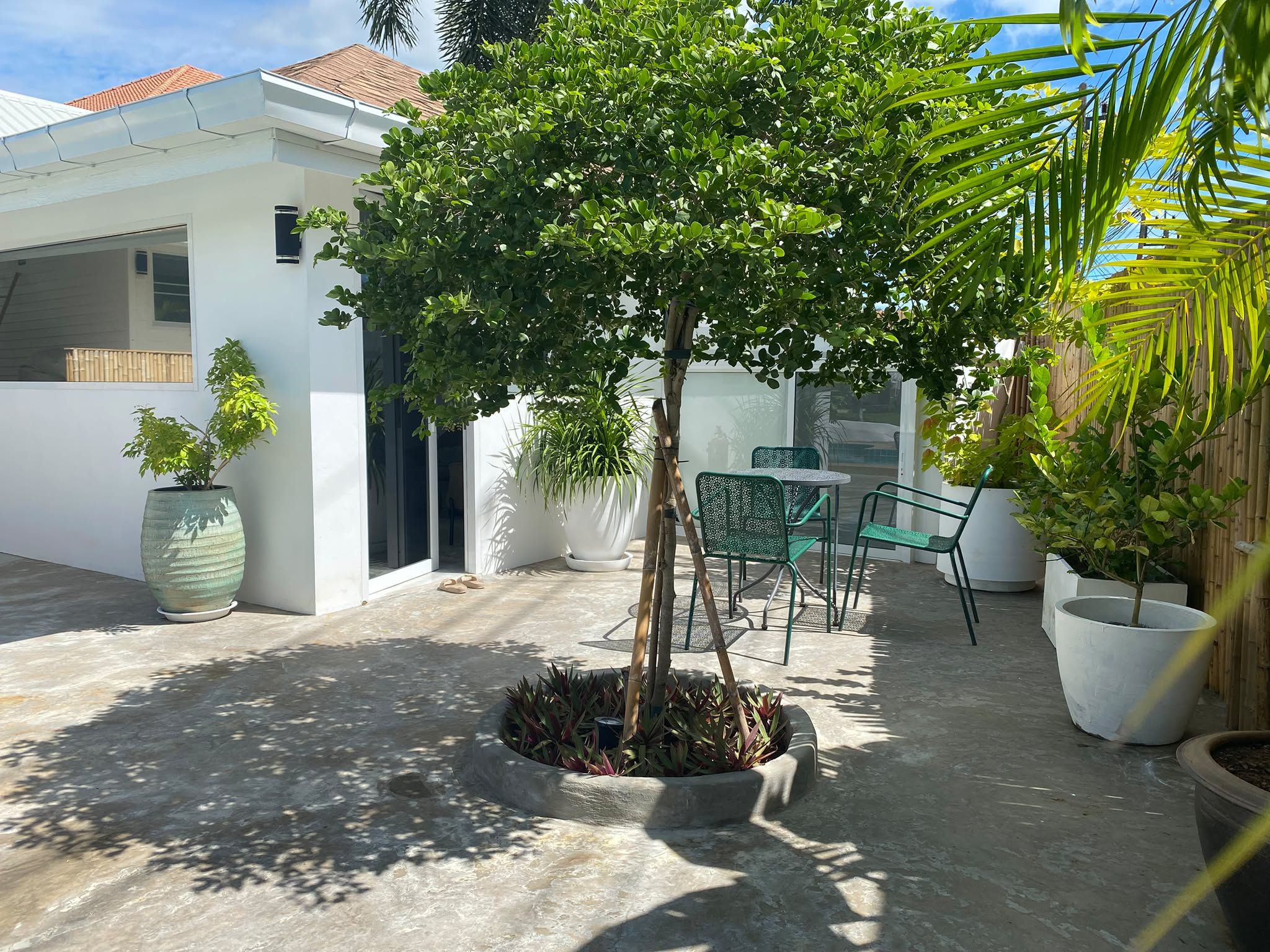
There are six new private bungalows, each with a queen-size bed, en-suite bathroom, air conditioning and Wi-Fi. Shared spaces include a swimming pool, a Western-style kitchen, a TV room for quiet evenings and generous seating around the garden, so you can spend time with others or find quiet space when you need it.
Are meals provided?
Yes. Breakfast and lunch are provided, and the house has a new Western-style kitchen. Breakfast comes after the early walk, meditation and journaling. How dinner works: [dinner arrangements – TBC]. If you have dietary needs or allergies, please mention them when you first get in touch so we can talk them through.
What is there to do nearby?
Plenty. The White Room is less than five minutes' walk from the Khao Tao reservoir and two beaches, with gentle hills, temples, local Thai restaurants and cafés close by. The wider Hua Hin area has sports facilities, golf courses, viewpoints and markets, so residents can enjoy the outdoors and connect with the local community.
Rules & safety
House policies are being written up. Until they are published, ask Fred before you book.
Do you test for alcohol and drugs?
The White Room is a sober living residence, so everyone who stays commits to living free from alcohol and drugs. How and when we test is still being confirmed: [testing policy – TBC]. If testing matters to you or to your family, ask Fred about it before you book so you know exactly what to expect.
What happens if someone relapses?
Relapse can be part of some people's story, and we respond to it with honesty and care. Our written relapse policy, including when a stay can continue and when it cannot, is being finalised: [relapse policy – TBC]. Please ask Fred about it before you arrive, so you know exactly what to expect.
Can I bring prescribed medication?
The White Room is non-medical, so we do not prescribe medication. If you take prescribed medication, tell Fred about it when you first get in touch, so together you can check whether The White Room is the right place for you at this stage. Our full medication policy: [medication policy – TBC].
What should I do in an emergency or crisis?
If you are in danger right now, call 1669 for Thai emergency medical services or 1323 for the Thai mental health hotline, or your local emergency number if you are outside Thailand. The White Room is not an emergency or crisis service, so please do not wait for a reply to a WhatsApp message.
Nearest hospital: [nearest hospital and distance – TBC]. More on what we are and what we are not.
Travel & arrival
Where the house is and how to get here.
Where is The White Room?
The White Room is in Khao Tao, a quiet village in Hua Hin district, Prachuap Khiri Khan province, Thailand. It is less than five minutes' walk from the Khao Tao reservoir and two beaches, and about 2.5 to 3 hours from Bangkok. It is peaceful without being isolated, with temples, cafés and hills nearby.
Our contact page has the address, a map link and directions.
How do I get to Hua Hin from Bangkok?
Hua Hin is about 2.5 to 3 hours from Bangkok by car or train, and minivans and buses also run frequently. Hua Hin's historic railway station is still in use. Once you are in the area, taxis, tuk-tuks and songthaews (shared pick-up trucks) are easy to find for the last part of the journey.
Do you offer airport pickup?
Airport pickup: [airport pickup and cost – TBC]. Most international travellers arrive through Bangkok, and from there Hua Hin is about 2.5 to 3 hours by road. Whether we can arrange a transfer for you, and what it costs, is still being confirmed, so please ask Fred when you discuss your dates.
Do I need a visa to stay in Thailand?
Visa rules depend on your nationality and how long you plan to stay, and they change from time to time. Check the official Thai e-Visa website or your nearest Thai embassy before you book flights. Whether we can help with visa paperwork: [visa support – TBC].
Read more before you get in touch
Each page goes deeper into one part of a stay. Take your time: there is no rush and no obligation.